War hero Ken’s memory lives on
One of the first British paratroopers to set foot in France on D-Day, local man Ken Naughton evaded Nazi gunfire, only to be captured and held a Prisoner of War before making a daring escape. Deborah Wain shares his remarkable story
A Derbyshire paratrooper stationed at the local camp of the Parachute Regiment in 1943 went on to become a hero of the opening moments of the historic D-Day landings in France. Elizabethan mansion Hardwick Hall was a tough wartime training base for the regiment – the elite airborne infantry of the British Army. Ken Naughton was among men who did their basic parachute instruction there and was later one of the very first British soldiers to drop in to Normandy on the night of June 5th/6th, 1944 – D-Day. His unit’s job was to mark out landing zones and establish radio contact ahead of the main invasion force. Within hours of setting foot on French soil, Lance-Corporal Ken was captured by the enemy and taken Prisoner of War, but later escaped.
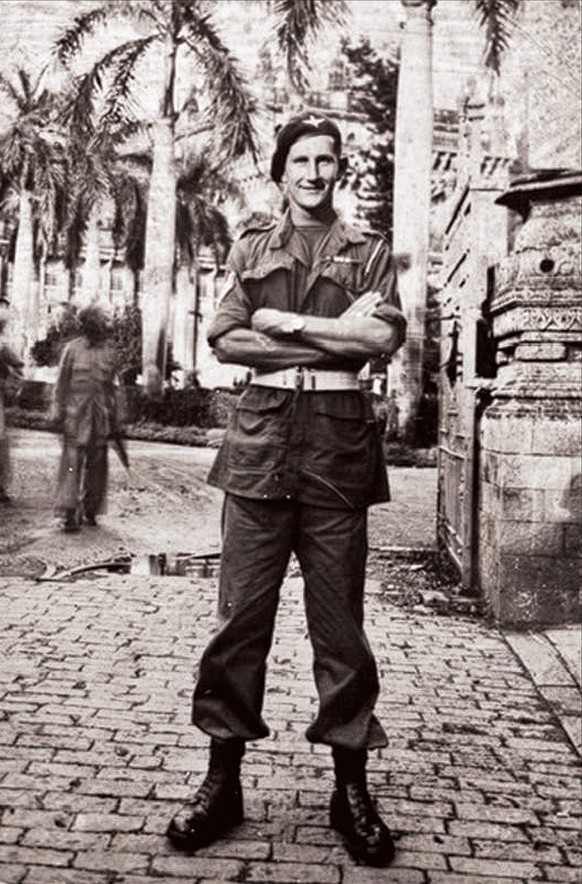
Ken Naughton from north Derbyshire marked out landing zones and established radio contact for the main D-Day invasion force
He recorded his extraordinary story in his own book written shortly before his death in Canada in 1983. Ken’s niece, Marilyn Brailsford, of Wingerworth, said: “My Uncle Ken was a very brave man and our family are very proud of him. We’re also fortunate that he wrote a book, about all his Army experiences.”
Ken grew up in Clowne after being born in 1923, one of four children to a miner who had been injured in World War I. At the age of just 17 in 1941, Ken went to Chesterfield Drill Hall to sign up for the Royal Warwickshire Regiment. During a stint with the coastal artillery in Scotland, he met a paratrooper and decided to apply to undertake a parachute course, eventually transferring to Hardwick in 1943.
At the time, his family had no idea he was staying so close to home. Ken subsequently passed all his further training to become a Paratrooper with pathfinder unit 22nd Independent Parachute Company, 6th Airborne Division. Following his months of training, Ken learned that Operation Overlord – the invasion of Europe – was ahead of him and his comrades.
“‘We would lift the yoke of the tyrant from off the people of France first, then go on to Belgium and Holland,” he wrote in his book ‘For King & Country’. After collecting their equipment, the men went to a high security area near Harwell airfield; 60 troops would go, with 16 others held in reserve, and Ken’s name was on the list. “We were issued extra special stuff, like escape aids, button compasses, silk maps of France, small hacksaw blades and tips on contacting the underground if the need arose.
Next came intensive studies of sand table models and maps of our area,” he wrote. Ken learned his plane – carrying a ‘stick’ of ten men – would be the first to land in drop zone K, about six miles inland. As the paratroopers landed, so would gliders carrying a small strike force to take the bridge over the Orne – now named ‘Pegasus Bridge’.
Of the beginning of the mission, Ken wrote: “Loaded down with just about everything you could think of in our leg bags and on our person, we put on our chutes and embarked through the drop-hole in our aircraft, one of the Albemarle-type aircraft which we had used before. “With the hole doors closed, we could just about squeeze in, once the doors were opened it would be murder.
We had to use this type for our job as it was fast and would give us a better chance to be put down near our target. I was number six, as I was slap-bang in the middle of a tangled mess of men and equipment. “We became airborne very quickly. All I could think of was ‘it’s too late to change my mind now’.” As the group readied to jump, the plane came under anti-aircraft fire, leaving Ken grateful of his position.
He continued: “The red light came on and we all tensed, waiting for the green. The engines died down somewhat and we knew it would be any second now. “One of the crew members yelled ‘We’re going round again’. The engines picked up but not before someone shouted ‘not too many ****** times’. “I’m thinking to myself, ‘it may be June but it’s darned cold up here with those doors open’.
Drop in engine revs, red light on and rather quickly there it was, the green light. I know we had a record in practice of having had a stick of ten men out of a plane in six seconds, however, I think that night we may have beaten it for it seemed to me that at the same time as I saw the green light I was out and floating earthwards.
An enhanced image of the 1930’s plans is below – tap/click to see the original document.
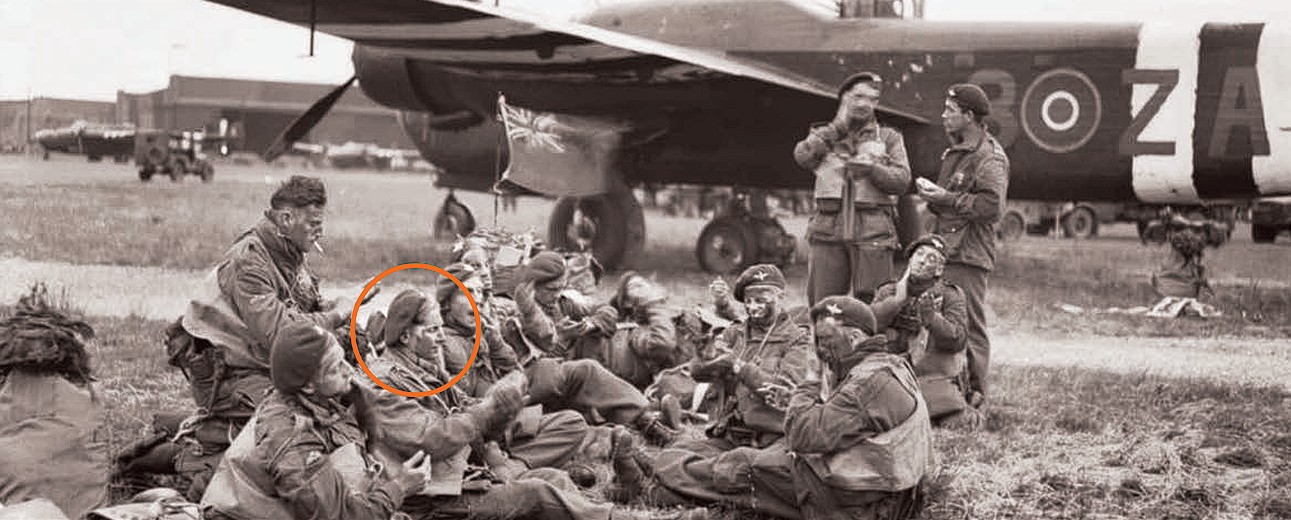
Ken, circled, waiting to board the Albemarle aircraft which dropped paratroopers over Normandy on the night of June 5th/6th, 1944.
Geoff Lewis in his book, fondly remembers visiting the cinema. As a child he visited most weeks for the Saturday afternoon children’s matinees when he paid 2d to watch the film and 1d for a bag of sweets!
The story goes that the local doctor, Doctor Allum who served the community for 42 years, was given a free seat which had his name on it. When he wasn’t at the cinema, the seat was always left empty. His favourite films were apparently those staring Laurel and Hardy
Lonely
“It was very peaceful, but lonely, as although I could make out the village of Ranville, the crossroads and the dim mass of the wooded area bordering our DZ, there was no sign of anyone else to keep me company. “With my leg-bag swinging at the end of its line I braced for the landing which, when it came, was perfect.”
Ken had landed in a wheat field and set off for the rendezvous point, being joined by his friend, Private Bob Stoodley. There was suddenly a burst of Sten-gun fire from the direction of Ranville, answered by a fast-firing German machine-gun. Ken wrote that the incident had killed another pal, Lance-Corporal Edward Delaney O’Sullivan, known as Paddy, and was the “first death of the invasion” although it hadn’t been recorded as such in history books.
Ken, Bob and two other men set up an Eureka – a radio location beacon – and lights, in preparation for the main drop. Following the success of the group’s initial mission, Ken took in the scene: a “hell of a racket going on all around us, bombing, shelling, machine gun fire and heavy equipment on the move.” As day dawned on June 6th, Ken’s group were spotted by a Nazi patrol as they hid in a ditch.
They exchanged gunfire, but realised their situation was helpless as tanks arrived to flush them out. “It was over quickly; I remember a flash and a bang of a grenade going off and bullets flying all around plus an enemy sub-machine gun pointing at my nose. We were in the bag,” wrote Ken. After being stripped of their weapons, the British troops were taken to their captors’ headquarters in a chateau for what Ken described as a ‘little chat’ before moving on to the village of St Pierre sur Dives where they were served food and faced further questions from intelligence officers.
Eventually, the group were taken to a Prisoner of War camp on the edge of Rennes, finding themselves amongst American and Senegalese troops. As soon as they arrived, the men were discussing their escape and listing money and aids they had hidden in their clothes. When the Commandant asked for medical corps men to help in the hospital in the town, Ken put himself forward despite only having field first-aid training as he thought it might offer a chance to escape.
However, the hospital was right across the street from Gestapo headquarters and he was warned the place was swarming with German soldiers, and local people would turn escaped prisoners in. Ken was put in charge of stretcher parties bringing in the wounded. “I saw a lot of young men die in there, in spite of the heroic work of the British, US, French and German doctors,” he wrote.
Ken paired up with an airborne medic, who helped to improve his French. The duo considered an escape plan which involved going out of the camp in a coffin, but scrapped the idea. They also tried finding their way out through a sewer, but to no avail. Ken’s eventual escape, on July 31st, came after he spotted an opportunity to be let out of a side gate to take a stretcher to an ambulance. As Allied bombers struck, he was able to run for cover in the chaos and hid in a garden before he was helped out to the countryside and eventually caught up with American units.
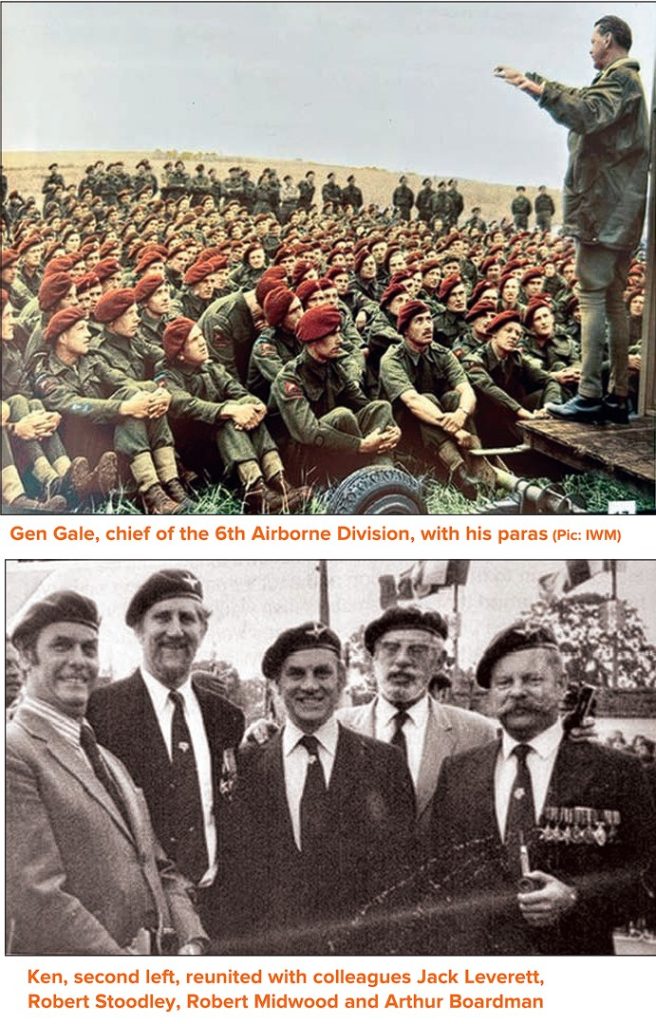
Ken continued to serve until the end of the war, including time in the Far East. After the conflict ended, he married wife Margaret, known as Peggy, and they settled in Chesterfield where he became a police officer. The couple had a daughter, Suzanne, and then emigrated to Canada around 1960. In 1974, Ken returned to Normandy with some of his comrades for the 30th anniversary of D-Day.
Afterwards Ken visited his family in Chesterfield and Marilyn remembers it well. “He seemed a really warm, generous and kind person. I remember him leaving from Chesterfield railway station where he gave everyone a little gift, and that was the last time I saw him,” she said. After Ken was diagnosed with Motor Neurone Disease, Suzanne persuaded him to dictate his wartime memories to her before the illness stole his voice. Sadly, in 1983, aged 60, Ken died, but by then 20 copies of his book had been printed and handed to family and friends.
Ken’s ashes were returned to Derbyshire and are buried in the family grave at the Church of the Immaculate Conception, at Spinkhill. In 2023, Marilyn travelled to Normandy where she was amazed to see photographs of Ken on display in the Pegasus Bridge Museum, which is dedicated to the men of the 6th Airborne Division. “There was also a newsreel with him putting on his camouflage ready for his mission, it was very emotive, as I’d never seen that before, only the photo,” she added.
Suzanne died suddenly only recently – just before this magazine put out a call for relatives of servicemen who had trained at Hardwick Camp to get in touch. “It was Suzanne, who helped and encouraged Ken to write the book. She would have been so pleased to know his memory is being carried on,” said Marilyn.
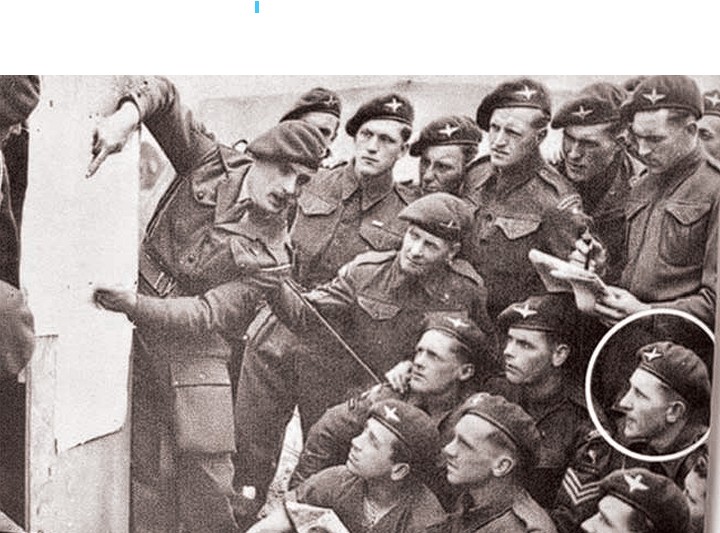
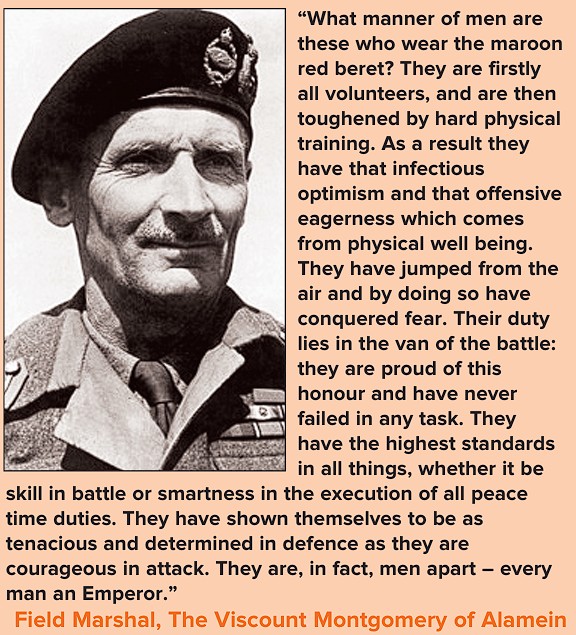
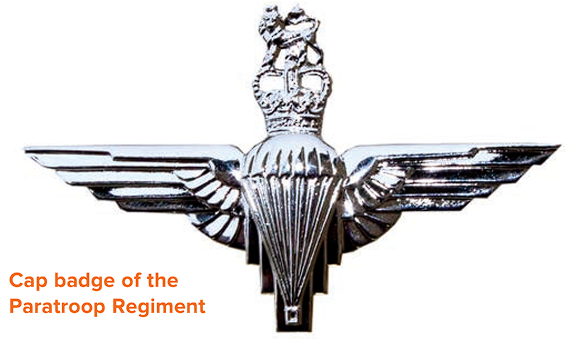
At Hardwick Camp, Ken described how he was allocated a bunk in a newly-built block, with a warning that “from waking up in the morning through until 6pm, everybody moved at the double unless in possession of a medical excuse.” He wrote: “The work at Hardwick was designed to break as many as possible and every week men were RTU’d (returned to unit) in quite large numbers but, as they trucked out, more came in – all eager for the red beret and the honour of being a jumper.
“The culmination of those weeks of unarmed combat training in the use of weaponry, obstacle course torture, and the constant running everywhere was the forced march at the mercy of the physical training staff who had been told we were over-anticipated strength and, until ten men dropped out, we would be kept on the road.
“We set off at the double through the gates, down the familiar roads, past the drinking places I knew, through the grimy pit villages, up the steep hills and down the other side until you felt like a robot, a running stumbling, gasping-for-breath copy of a young human being. “Through one of the villages towards the latter end, incensed housewives hurled insults at the PT men who were driving us on. We must have looked a pitiful bunch to have aroused those hardy dour souls to come to our defence.”
Despite the challenges, Ken recorded that the group had been relatively lucky, as the next syndicate to follow the men to Ringway Parachute School in Manchester did not have the forced-march test, but had to field-march over the moors to Ringway over four days. He also praised the quality of meals at Hardwick.