Clowne Cinema – The Picture Palace
Some of Clowne’s older residents may recall the village having an impressive, 500 seat cinema that was first established in 1910 and operated for over 50 years until it closed in 1961 and then the building demolished.
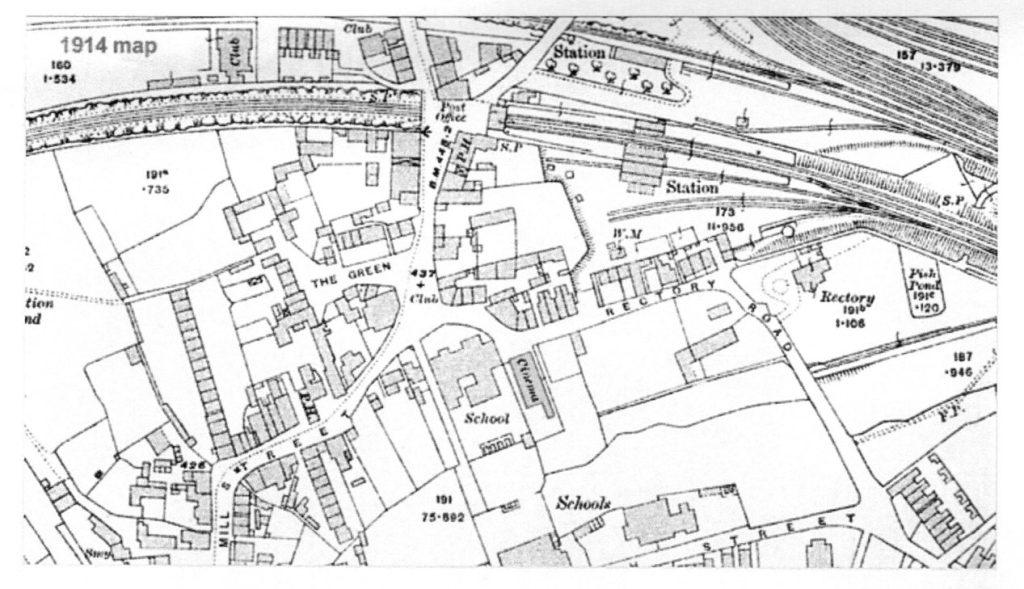
Located on Rectory Road in the centre of the village, it was situated adjacent to the Old Infant School building now the ‘Old School tap house’. (see 1914 map) During the beginning of the twentieth century, the village was booming with the population almost doubling in the 10 years from 3,896 in 1901 to 6,037 in 1911. The village saw a range of commercial buildings being developed in the Mill Street /North Road area alongside residential expansion to house the many incomers that were attracted to the employment opportunities in the village and surrounding areas linked to the mining industry and the development of the two railway companies.
On the 22nd of September 1910 a Limited Company was officially registered under the Companies Act of 1908 and Articles of Association issued.
It had the grand title of: –
‘Clowne and District Cinematograph Company Limited’
Seven principal shareholders are listed in the official documentation, each holding between 50-200 shares each. (see diagram 1) They held a total of 950 shares between them.
The Company’s aim was to raise £2,000 of capital divided into 2,000 shares of £1 each.
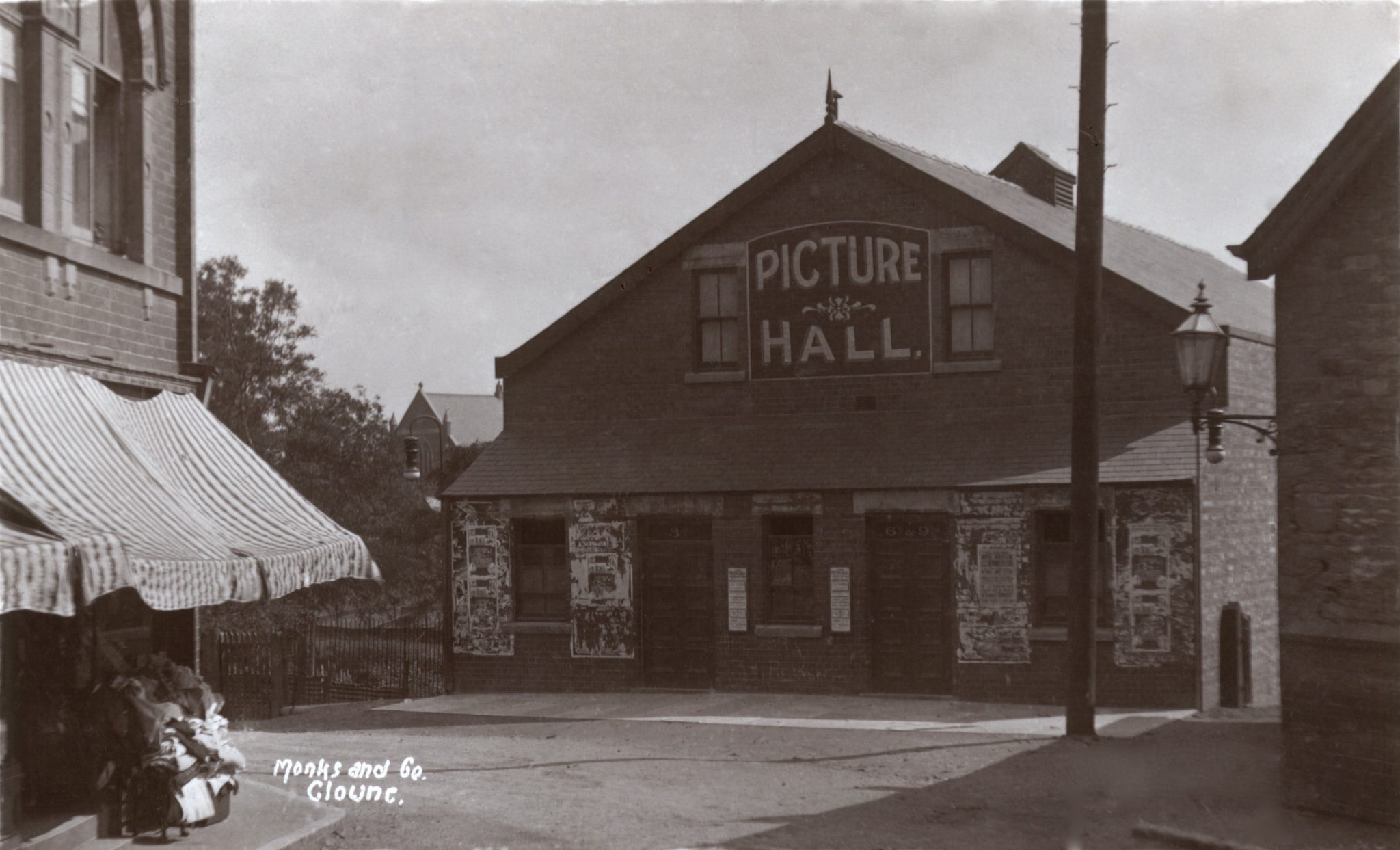
The cinema opened for business in June 1911.It was originally called ‘The Picture Hall’ (see photo A)
In the 1920’s -the era of the black and white, silent movie- the resident manager was Frederick Ewart Bould who was one of the shareholders. It also held a music and dance licence. Its programme included 1 film nightly with 3 on a Saturday including a children’s matinee. There were 2 programme changes each week and the entrance cost 3d to 9d. (less than 5p in today’s money!!)
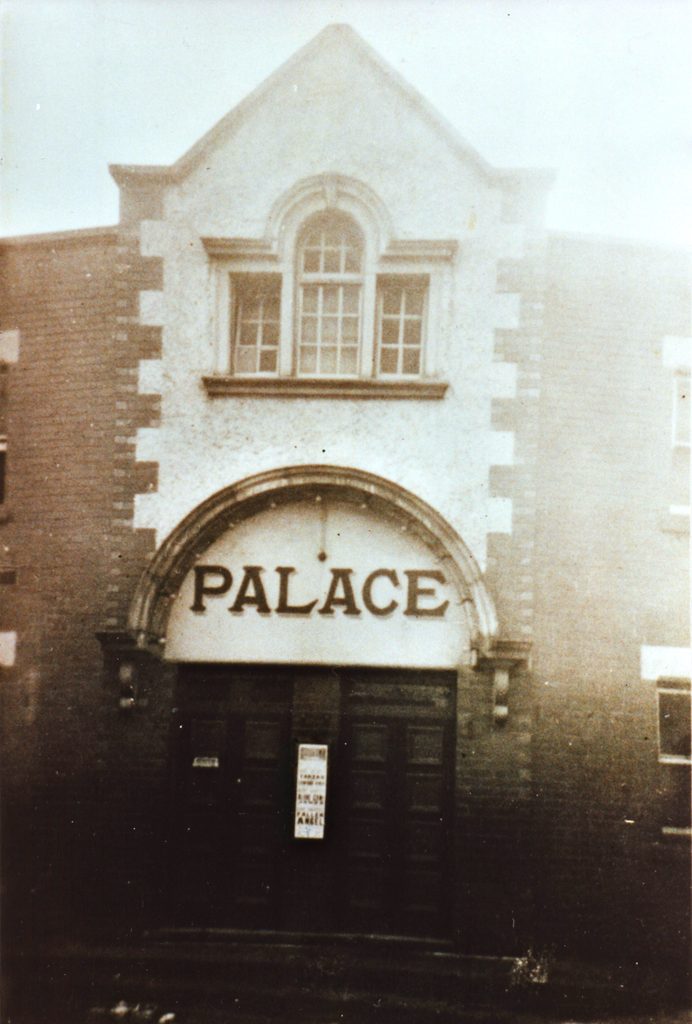
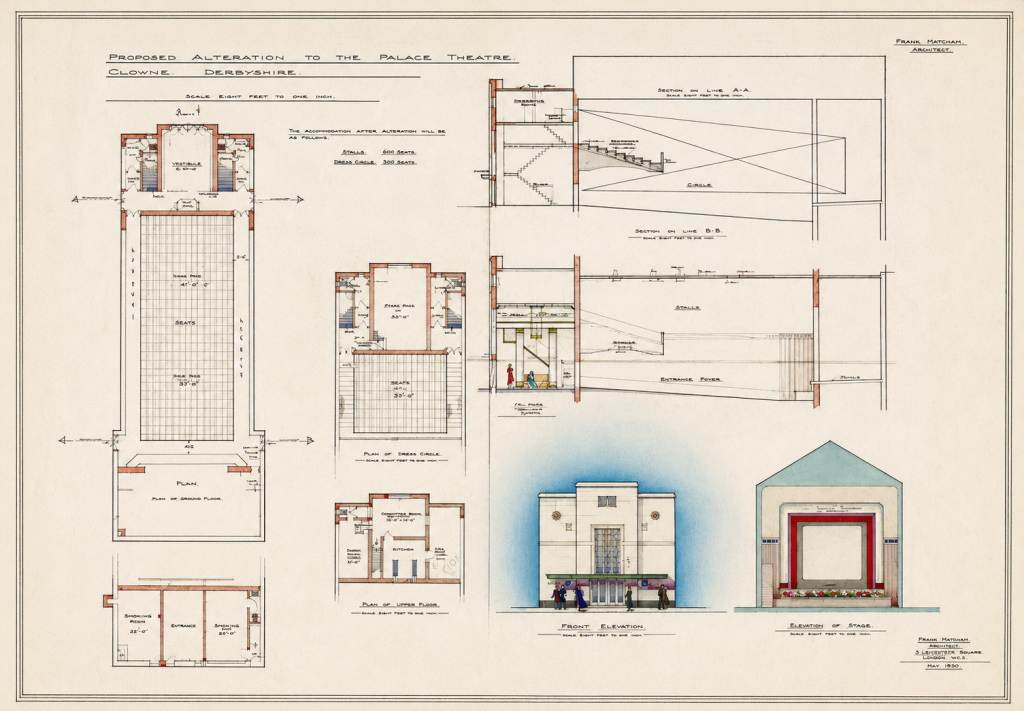
In the 1930’s, the cinema frontage was rebuilt probably to accommodate the arrival of sound and ‘the talkies’. Larger space was also needed for the projection area and by 1935 it was equipped with a ‘Western Electric Sound System ‘. It also had a 22 ft. wide screen and stage frontage. It was during this period that its name was changed to ‘Clowne Picture Palace’.
Not surprisingly, prices rose to 4d and 1/- for the best seats in the balcony. There was now a capacity of 500 seats and apparently only one toilet!
An enhanced image of the 1930’s plans is below – tap/click to see the original document.
Geoff Lewis in his book, fondly remembers visiting the cinema. As a child he visited most weeks for the Saturday afternoon children’s matinees when he paid 2d to watch the film and 1d for a bag of sweets!
The story goes that the local doctor, Doctor Allum who served the community for 42 years, was given a free seat which had his name on it. When he wasn’t at the cinema, the seat was always left empty. His favourite films were apparently those staring Laurel and Hardy
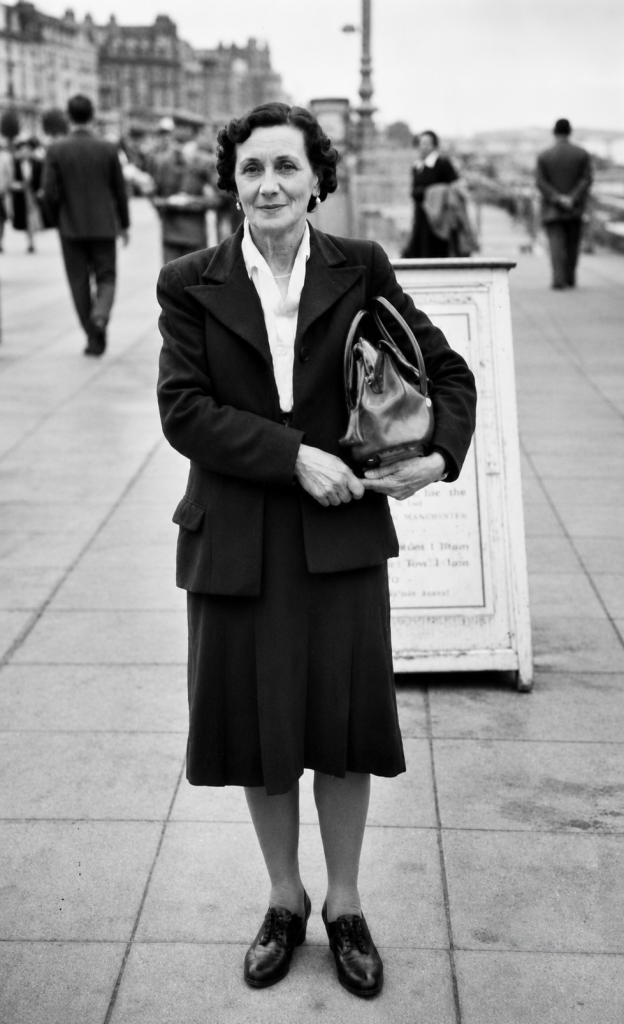
Mabel Marshall – a local housewife who became a Company Director
Mabel, born and bred in Clowne was the daughter of Joseph Milner who was the manager of Southgate Colliery. She was married to Percy Marshall; a local butcher and he was later to become the founder of the Midland Bacon Factory. In January 1918 Mabel, at the age of 33 with two young children, bought 30 shares in the ‘Clowne and District Cinematograph Company Ltd’. They cost £1 each and according to the Certificate, the Company were offering a total of 3000 shares to buy to raise £3,000. See share certificate
In March 1943, during the height of the Second World War, Mabel at the age of 58 with three grown up children, but still living on High Street, bought a further 60 shares again at a £1 per share. A total cost of £60 which was a lot of money in the 1940’s. Again, the company needed to raise more capital of £3,000. See share certificate
Soon after, in April 1946, Mabel received a handwritten letter inviting her to become a Director of the Clowne and District Cinematograph Company – See the letter
It would have been quite unusual for a woman at this time to be a Company Director in a local enterprise such as a Cinema. The role she did until her death.
*Note, the photo of Mabelhas been enhanced from the original
Post World War II Developments
During this period, the Picture Palace was managed by Herbert Hebden who was also a Director of the Company. He and his family ran the local sweet shop opposite the cinema too. In the 1950’s prices rose to 1/6d for the cheapest seats to 2/4d in the balcony. Children and OAP were charged 1/- (5p in today’s money).
Many local people remember going to the cinema to see the latest releases. In 1953 the ‘Robe’, a Biblical epic colour film, was one of the first motion pictures using widescreen Cinema Scope projection. It starred Richard Burton, Jean Simmons and Victor Mature. It proved very popular with people, with queues stretching along Rectory Road. Even the village rector was spotted in the audience and his presence commented upon.
Projectionists during the 1950’s included Victor Meades, the longest serving member who had trained in Lowestoft along with Geoff Burton and Eric Allen.
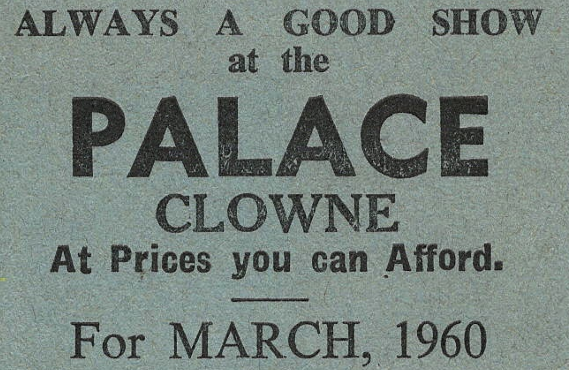
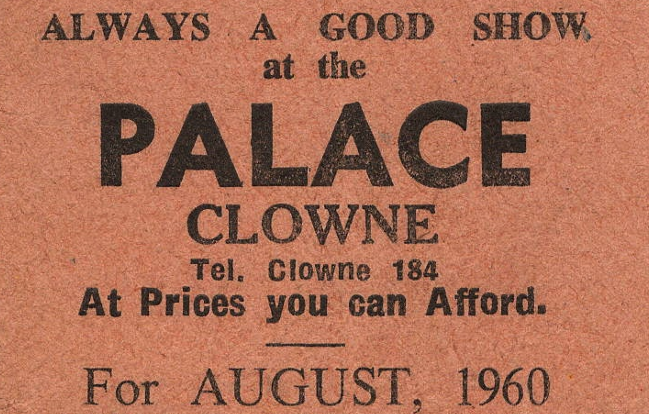
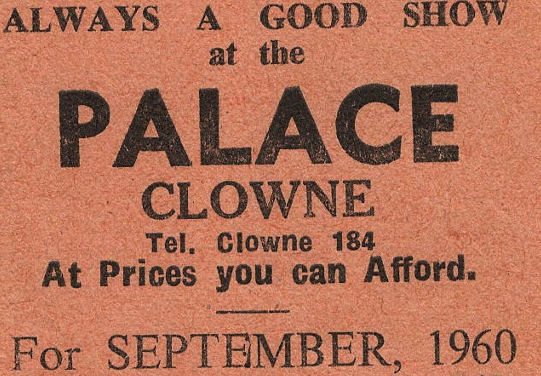
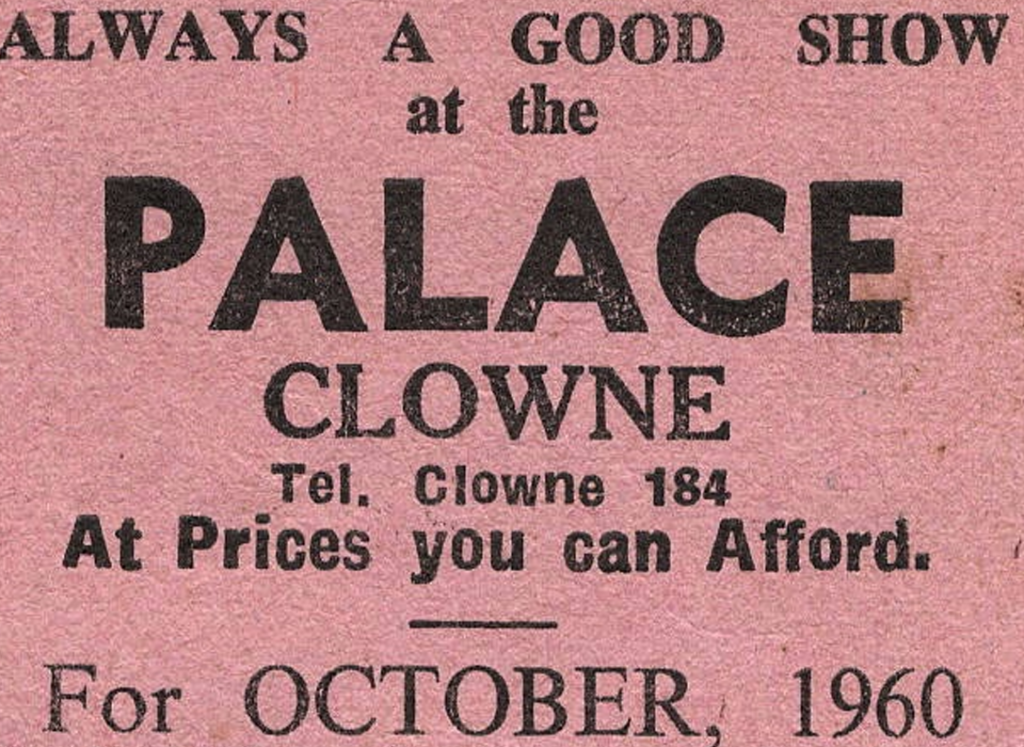
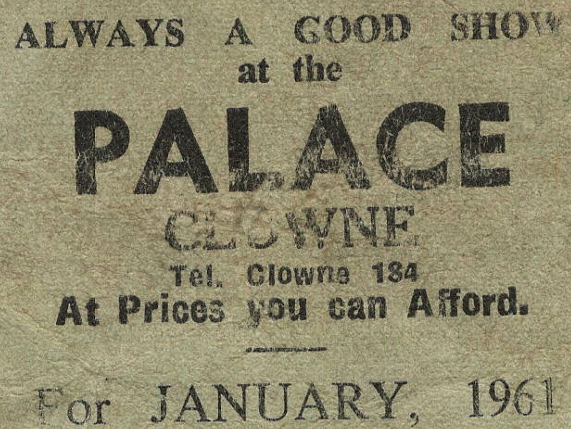
In the 1960’s a monthly booklet was published giving details of the up and coming films and the price list…’all at prices people could afford!’ (see examples of programmes at the end of this article)
The Licensee was Bill Bolton and the manageress K.H.Bolton. The story goes that one of the cinema’s employees, Charlie, would keep everyone in line with the help of a big stick!
Saturday matinee films were very popular with the local children where there was a special programme running from 2pm in the afternoon. The latest cowboy films were favourites along with comedies.
‘Always a Good Show at the Palace Clowne’
The Picture Palace closed in 1961, and the company wound up in May 1963. The building was demolished soon after and replaced by an extension to N.E. Derbyshire Tertiary College and village library. This has since been replaced more recently by a housing development and there are no signs of the former Picture Palace – just memories of happy times spent there.